
Constance Stockman's baptism entry in Matcham's 1844 book Hundred of Frustfield
A Whiteparish local history page from younsmere-frustfield.org.uk
See Stockman family for other members of the Stockman family (John 0, William 1, William 2 and Joseph 2).
See Stockman - references for a detailed analysis and commentary on the available references to the Stockman family and their dealings.
Constance Stockman (married name Constance Chettel) was the great grand-daughter of John Stockman of Barford, who died in 1605 and is buried in Downton church with his wife and the children who predeceased him. The process of buying, developing and selling land that the family had engaged in came to an end with two sales of land by Constance after she had married Thomas Chettel in 1676.
Constance Stockman was baptised in Whiteparish church in 1653, where the parish register shows her as the daughter of Joseph Stockman. Matcham copied a range of baptism, marriage and death dates from the parish registers, and this is among them.
Constance Stockman's baptism entry in Matcham's 1844 book Hundred of Frustfield
23 years later in 1676, a year after her father Joseph's death, she married Thomas Chettle and on the marriage licence styled herself 'Mrs'. However, the marriage licence also states that she was a spinster and aged about 23, the age matching the baptism record above. At that date, any independent woman would have styled herself Mistress. These additional pieces of information appear to have been overlooked in the preparation of the Victoria County History for Wiltshire 1980, volume 11 pages 19-77 (under Barford Manor), which incorrectly states that she was Joseph's widow, and this has been propagated to some of the genealogical websites, notably Geni and Ancestry and thence to later works such as the History of Landford by John Martin. This and other inconsistencies in the records of the Stockman family are addressed in detail in Stockman - references.
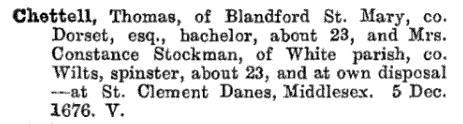
Marriage of Mrs Constance Stockman to Thomas Chettle, 5th December 1676
Google Books London marriage licences 1521-1869, Joseph Foster, Joseph Lemuel Chester, John Ward Dean, Dalcassian Publishing Company, 1 Jan 1887, London.
This entry is on p.275 and in the index on p.1585
Constance was the last of several members of the Stockman family associated with land purchases, separation and sale as estates in Whiteparish and elsewhere. Her grandfather William Stockman 1 (1560-1635) had bought Titchborne (earlier Abbotstone) Manor, on part of which land he built the house at Newhouse and sold it with an estate. Later he purchased Whelpley Farm and Street Farm and in 1627 rebuilt what was probably Whelpley Manor house in brick, a house we now know as Abbotstone House, the Abbotstone name reflecting the fact that he retained the title to Abbotstone manor but didn't have the title to Whelpley manor, in which the house stood.
William 1's sons, Constance's uncle William 2 and father Joseph 2 inherited their father's land and when he died William 2 passed his share to his brother Joseph 2. Joseph 2's remaining land descended to Constance. As will be seen below, Constance and her husband Thomas profited by selling this inheritance. It seems probable that they moved in or before 1688 to other of Thomas's land or inheritance, the baptism of their daughter in Whiteparish church in 1677 suggesting that after their marriage they initially lived in Whiteparish. Abbotstone House would seem most likely to have been their home at that time..
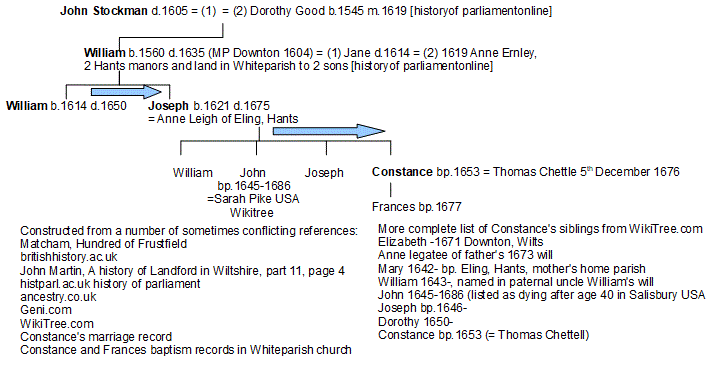
Members of the Stockman family associated with Whiteparish
The extract below from Matcham is quite long and complex and will benefit from some careful analysis and explanation.
This leaves the final point to explore. The Act of Parliament referred to in 1688 (1 William and Mary) enabled Thomas to sell what had been his wife's inheritance of Titchborne and the other lands from her father Joseph 2, notably Titchborne Farm (and probably lordship of Titchborne Manor), Whelpley Farm and Street Farm, but also at least one other as yet unidentified landholding in Whelpley Manor, this latter being further discussed in Stockman - references (1622) and Stockman - references 1657. The large purchase price of £4000 reflects the business acumen the Stockman family had profited from in purchasing, improving and selling land in these two manors (and indeed elsewhere outside the Hundred and Parish) at a critical point in the history of the parish when these manors were being broken up into smaller estates. Stockman family and Stockman references set out and explore these dealings in greater detail.
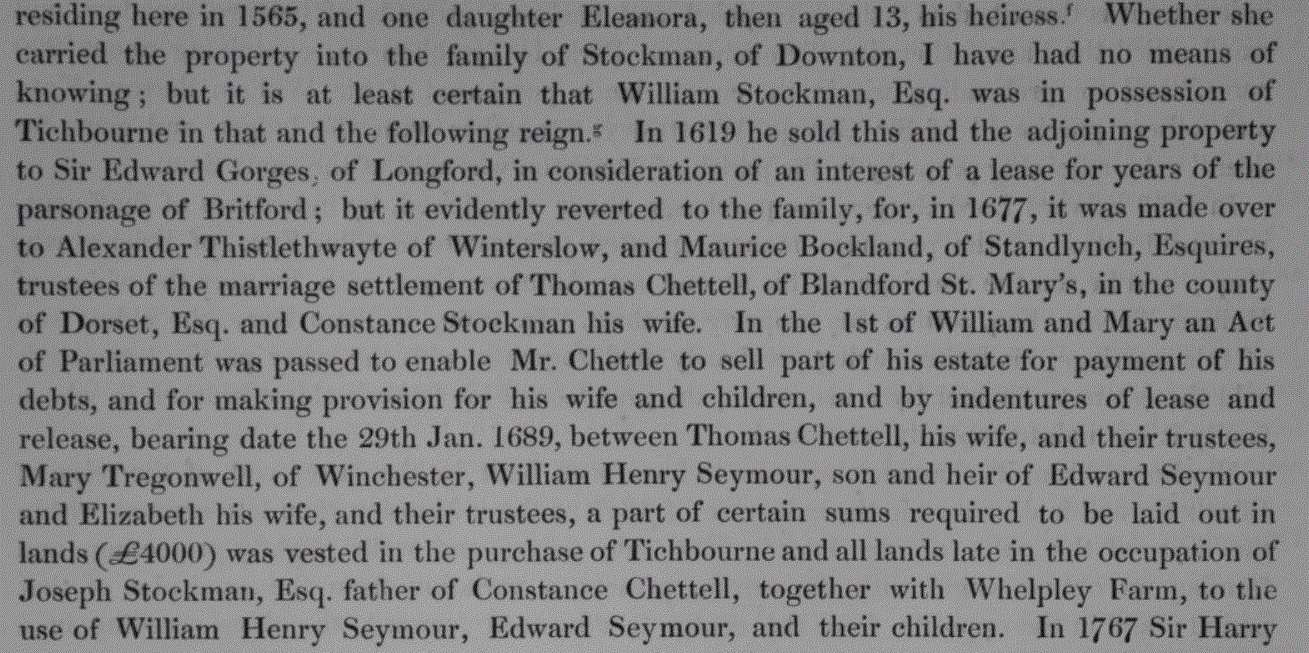
Sale of the Titchborne in 1677, consisting by then of the land that is now Titchborne Farm by the earlier sale of Newhouse and Dry Farm, taken out of manor land, Matcham page 51
This final reference to the sale of Whelpley repeats details of the 1688 sale covered in the previous extract above.
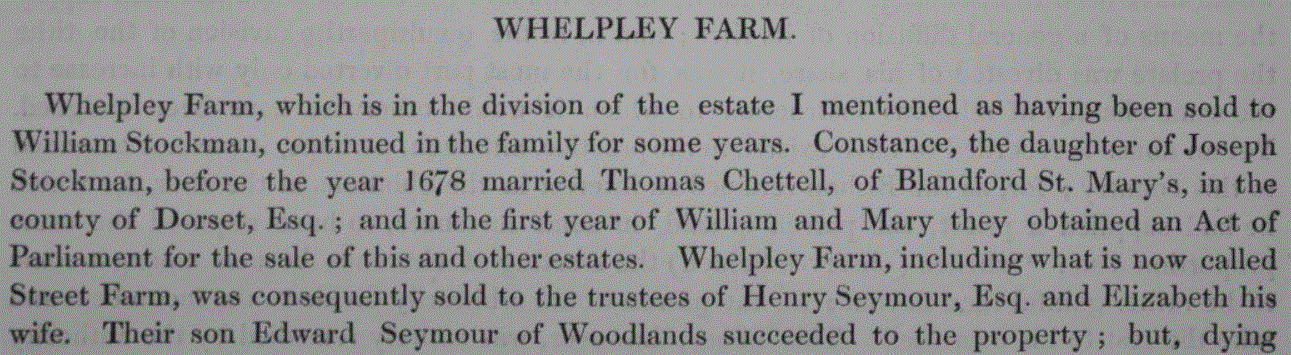
Sale of Whelpley Farm and Street Farm in 1688 (1 William and Mary), Matcham page 39